Many customer journey maps we produce for clients include a 'behavioural' element. This aspect is unique in terms of journey mapping, and we haven't seen it done in other templates or examples before.
What is COM-B?
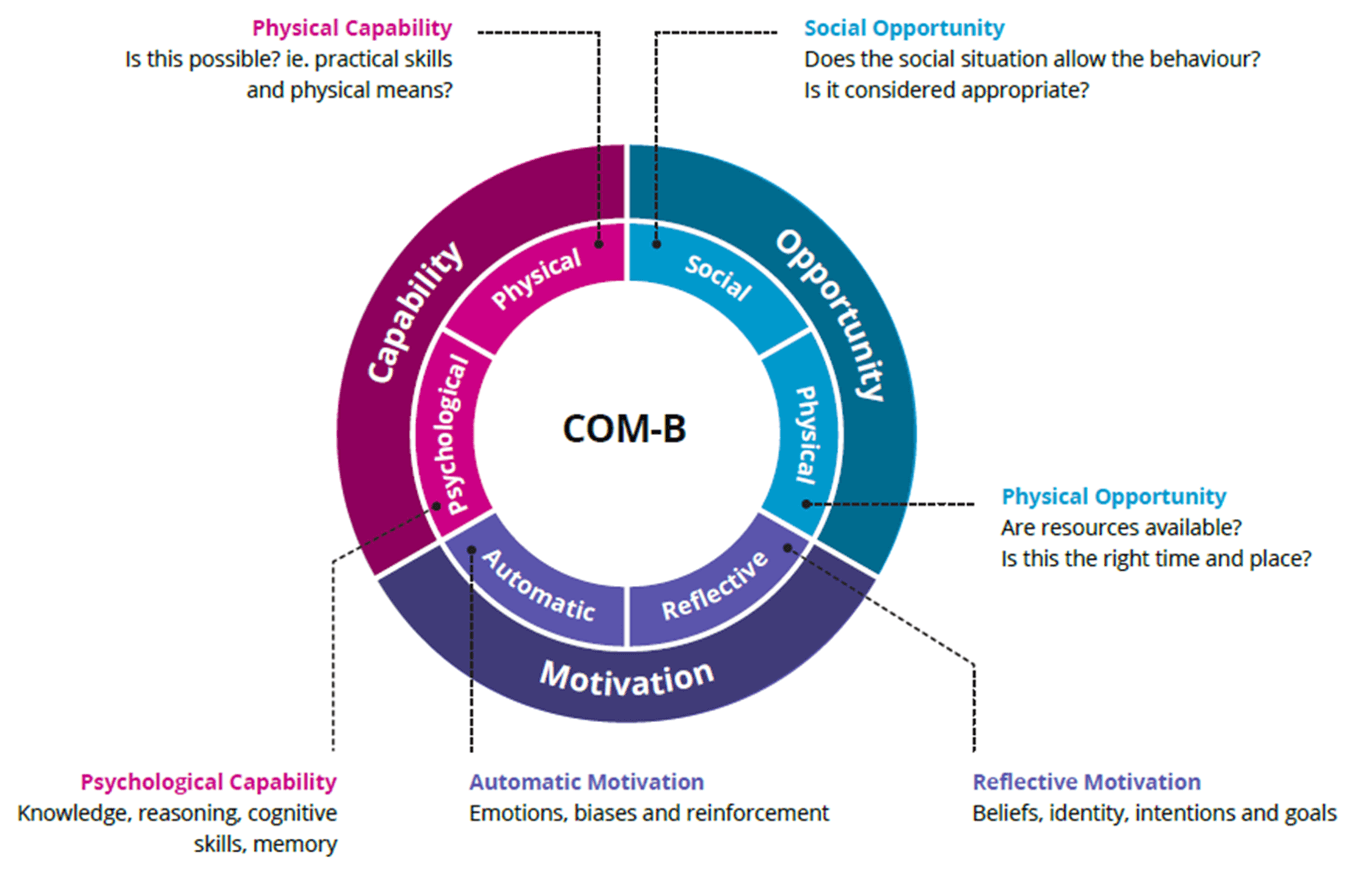
COM-B is a simple and effective framework for understanding behaviour.
The model has three components:
- Capability
- Opportunity
- Motivation
These make up the 'COM', and the 'B' stands for Behaviour. The model's premise is that it is possible to change a user's behaviour by influencing one or more of a person's capability, opportunity, or motivation.
Applying it to journey mapping
By looking at a customer's Capability, Opportunity, and Motivation, it's possible to define the appropriate behaviour and make considerations into influencing them to ease into the next stage of the journey.
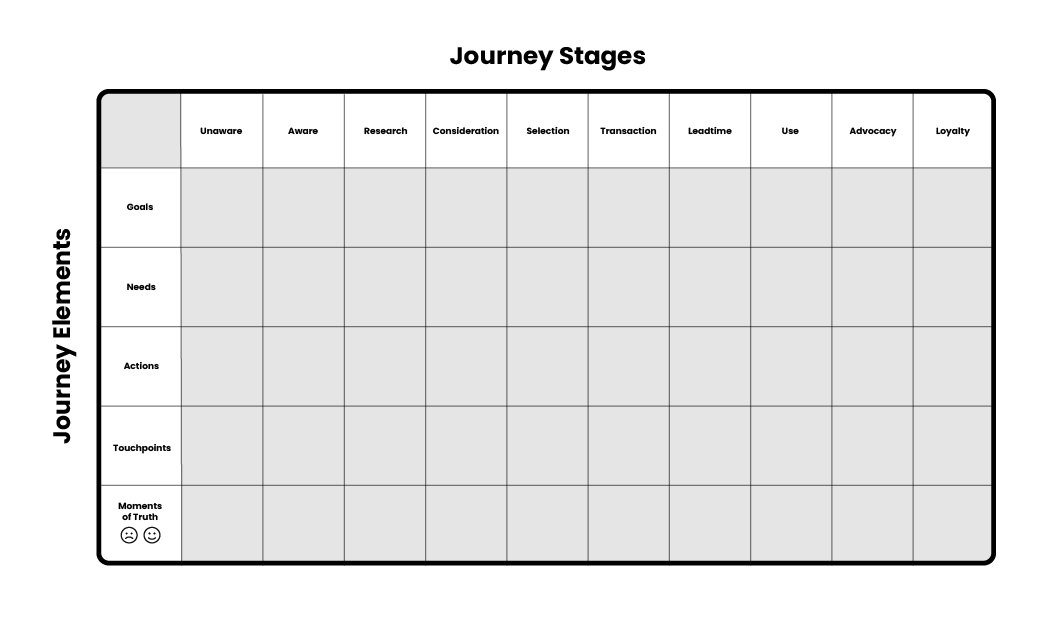
When conducting audience research, we find ways to measure the person's COM at each journey stage and indicate these as high, medium or low. Once mapped, these provide a quick, visual way of seeing where there are stages where they are particularly low, and therefore intervention is needed to try and increase them.
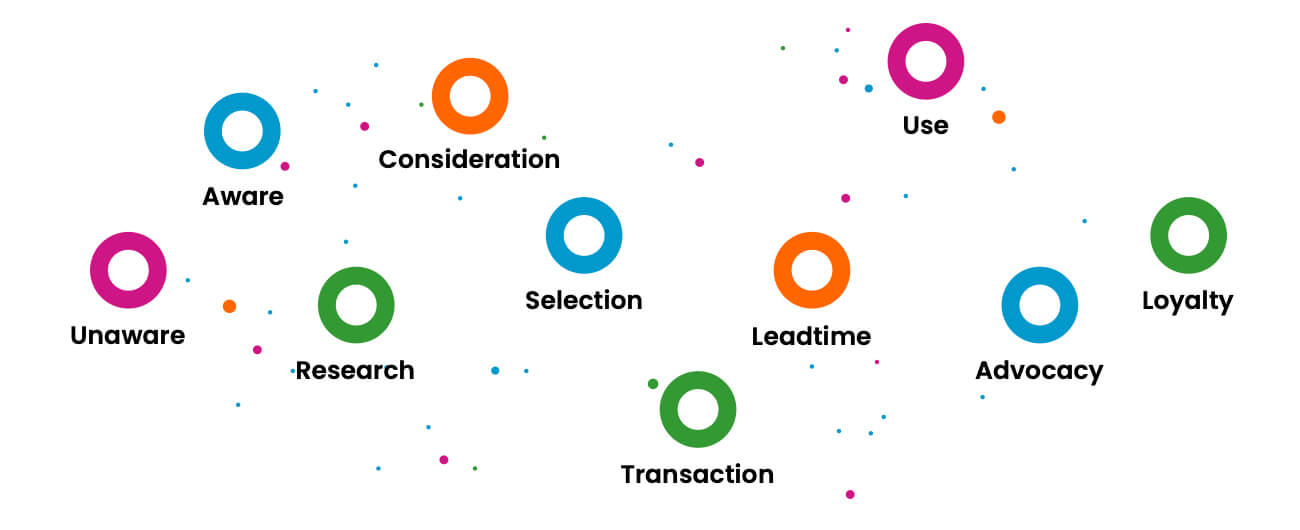
For example, we might see that during the Consideration stage of the journey, someone has medium-high Motivation (in this scenario, they want to buy a product) and medium-high Opportunity (they have the money). Still, they have low Capability (they lack the knowledge of the products you and your competitors are offering). Knowing this would lead to the production of some high-quality content, such as a series of how-to guides or explainer videos, then put these in front of the person (based on their noted touchpoints).
As a result, the user has increased knowledge (Capability) and presents the brand as one to consider in this area, building trust with them in the process.