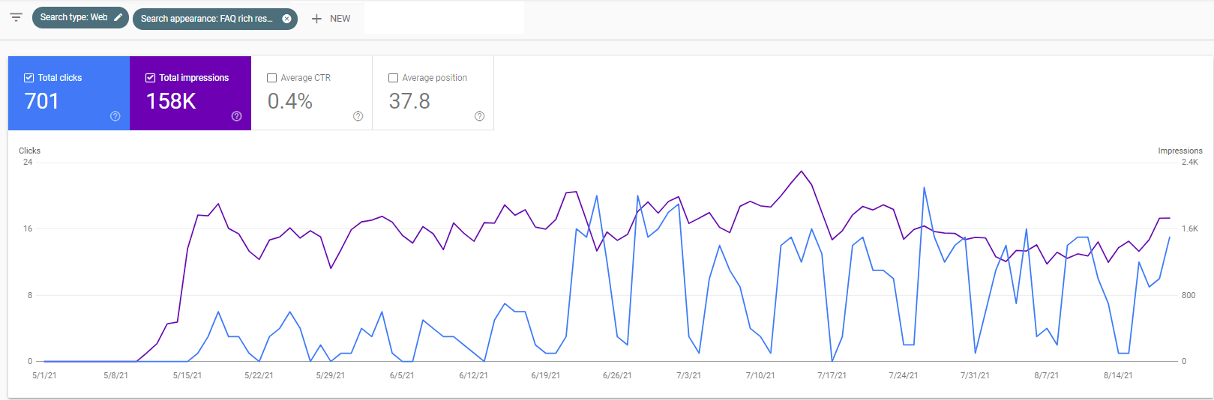
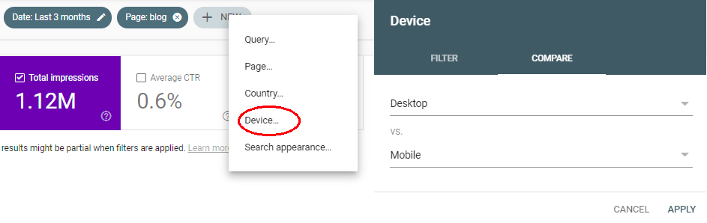
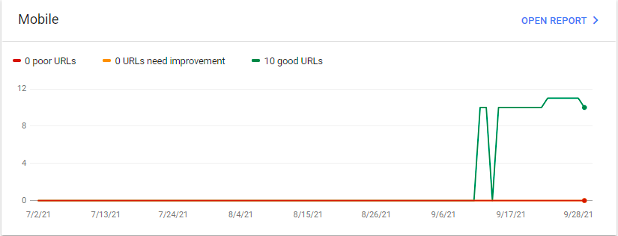
You can click on the CTR and average position filters to enable these in the graph and populate the columns in detail below.
You will need to specify a particular page. Otherwise, 'average position' will be calculated across all site pages, including the homepage (which probably has a high position) and much deeper pages which could rank anywhere.
You will also need to specify a particular query. Otherwise, 'average position' will be calculated from potential brand variations (with good visibility) and longer tail queries with a much lower average. Without these specifics, average ranking is rather vague and misleading.
CTR is a calculation of clicks divided by impressions. A high CTR indicates good interaction with the page. Either it answers a specific topic, or it has a high average position and is in a place people tend to click a lot.
Low CTR might indicate a low average position (too deep in SERPs). If it does have good average position, the SERPs appearance of that URL for that query is not helpful or tempting enough for people to click the result, or it's being swamped by other results from AI previews, rich snippets or paid ads, which tend to push organic results down the page.
By looking at impressions, clicks, CTR and average position, you can start to see:
Pages that have high potential (impressions) that are doing well with clicks and CTR
Pages that have high potential (impressions) that are underperforming with interaction (low clicks/CTR)
Pages that are positioned well for queries
Pages that are on the 'threshold' for queries, i.e. position #11-12, just outside page one of SERPs, or positions #4-5, just outside the top three organic positions
Pages with good performance require safeguarding; so, if the content changes, it's worth checking that these won't impact pages that drive results.
Pages that don't have much interaction and low CTR might need revisions to the page title and meta description to encourage more people to click through or the addition of schema to appear as 'rich snippets'.
Pages with high potential but aren't performing well may also have content issues; do they thoroughly answer the search needs for that query? What kind of content do competitor pages that outrank you organically have? Do you need to up your content game to compete? Pages on the threshold might need a little nudge in terms of copy or internal linking to do a bit better to gain and visibility and achieve even more traffic.
Using the date filter to compare date periods (say last month compared to the previous period) also allows you to see page and query performance. Search Console now gives you a 'difference' column between the dates that you can click to sort the results, meaning that you can see the results that gained or lost the most impressions and clicks between the comparison dates.
So, for example, if I take a popular blog article, exclude brand queries and compare the last three months against the previous period, I see an uptick in queries that involve the term 'mg111':
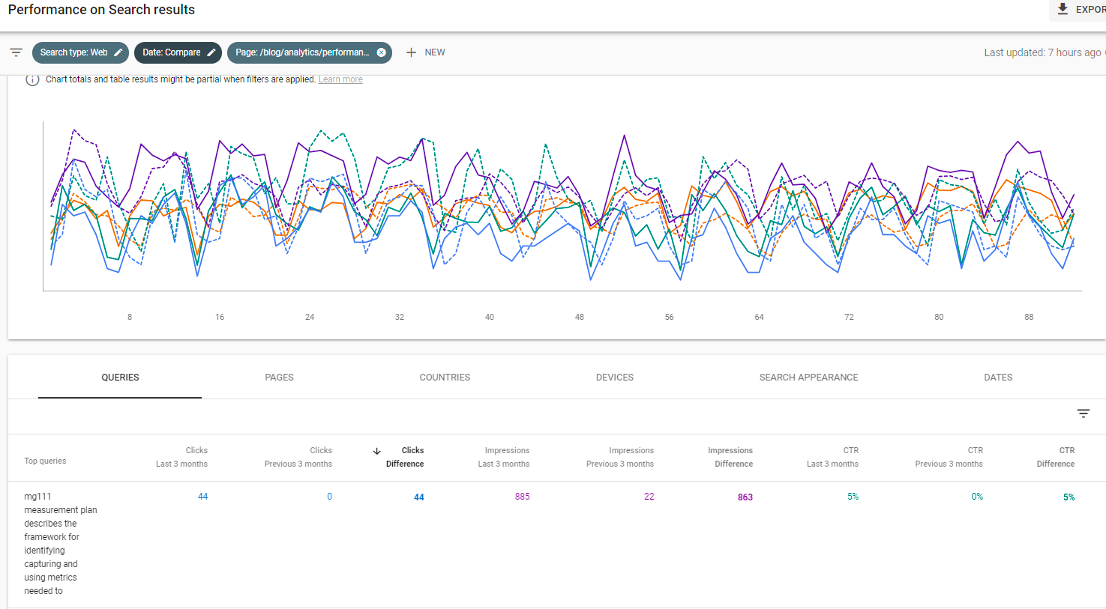
The top term – highly specific and longtail – is detailed here, and also clusters of similar terms show clicks and impressions.
A little deeper drilling shows this is mainly traffic from India, and the queries suggest it might be part of some online course about measurement plans that have referenced this page and the template.
The page itself doesn't mention 'mg111' anywhere... could we be cheeky and include it somewhere, either in the page copy or meta-information, to capture more traffic? Average CTR and position is good, but could it be pushed even higher? What additional business would this potentially drive?
This sort of analysis on pages that do well (or are not doing so well) can help create some content hypotheses to test out and see if they make a positive difference.